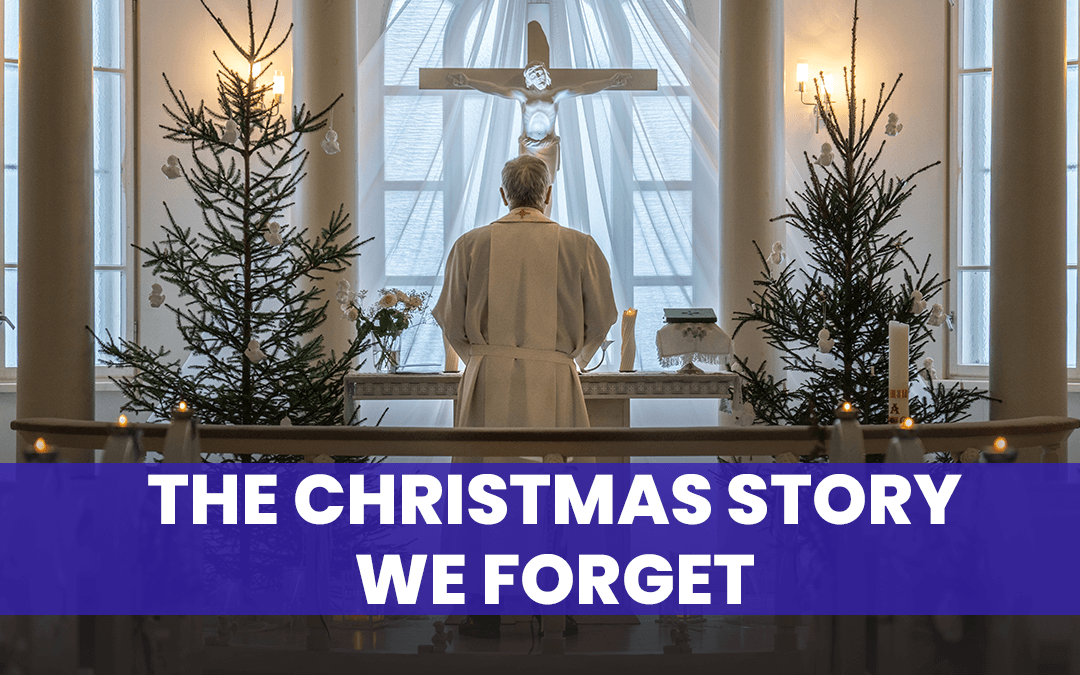
A sermon about Christmas is more than a retelling of the nativity. It is an invitation to rediscover why the arrival of Jesus still transforms ordinary lives today.
Why Christmas Preaching Still Matters
Every December, people walk through church doors holding expectations, memories, and invisible burdens. Some long for peace, others for clarity, and many for reassurance that God has not forgotten them.
This is why preaching a sermon about Christmas carries unique weight. The story of Christ’s birth is familiar, yet it touches the deepest human questions:
Where is God? Does He see us? Does He care?
The miracle of the nativity answers all three. The story reminds us that God steps into real circumstances—into tight budgets, strained families, dark nights, and uncertain futures. Christmas is not an escape from reality. It is God entering reality with us.
The True Setting of the Christmas Story
Over time, we have wrapped the nativity in soft light and gentle music. But the Bible presents a more rugged picture.
Mary faced misunderstanding. Joseph carried quiet responsibility. The shepherds lived on the margins. The wise men followed a sign that didn’t guarantee clarity. And Jesus was born in a world marked by political tension and spiritual silence.
Yet into that darkness came a single, fragile light.
That is why every sermon about Christmas must remind listeners: God works powerfully in the places we least expect.
How to Craft a Christmas Sermon That Connects Today
A meaningful message at Christmas does three important things.
1. It acknowledges real life.
People do not need perfection; they need honesty. A sermon that names loneliness, fear, or disappointment opens hearts to hear the comfort Christ brings.
2. It lifts their eyes to God’s presence.
The message of Emmanuel—God with us—is not a seasonal slogan but a declaration of reality. God moved into the neighborhood, not the ideal version but the broken one.
3. It invites response.
Christmas is action-oriented. Mary responds in faith. Joseph responds in obedience. Shepherds respond with wonder. Wise men respond with worship. A good sermon asks listeners to take a step toward Christ in their own lives.
With those foundations in place, you can offer sermons that feel alive, relatable, and deeply anchored in Scripture.
3 Sermon Ideas for a Powerful Christmas Message
Below are the three strongest and most resonant sermon ideas to include within your article. Each one explores a different facet of the nativity—hope, humility, and nearness—while remaining deeply connected to the central theme of any sermon about Christmas.
SERMON 1 | When God Shows Up in the Middle of Your Mess
Scripture: Luke 2:1–7
Introduction
Many people approach Christmas feeling like their lives are too chaotic, too uncertain, or too broken for God to work through. But the first Christmas was not polished, peaceful, or picture-perfect. God stepped into a messy situation long before it looked holy.
The Unexpected Reality of Bethlehem
Mary and Joseph arrived in Bethlehem exhausted, worried, and unprepared. Nothing went according to plan. There was no room, no comfort, no quiet moment of serenity. And yet, this is where God chose to enter the world—not after everything was fixed, but right in the middle of the struggle.
When preaching a sermon about Christmas, this truth is essential: the miracle didn’t wait for stability.
God’s Presence in Disorder
The manger tells a powerful story. God does not avoid disorder; He redeems it. Many imagine that God draws near only when we present our best selves, but Christmas proves the opposite. He goes where He is most needed—into fear, into tension, into the spaces we would never choose.
The stable becomes a symbol of God’s willingness to draw close to anything that feels unworthy or unfinished.
Application for Today
Invite listeners to consider the places in their own lives that feel chaotic or overwhelming. Encourage them to see those places not as barriers to God’s work but as invitations for Him to enter.
If your world feels messy this Christmas, you are closer to Bethlehem than you think.
Conclusion
A sermon about Christmas should leave people with this truth:
Your mess is not too big for God. It may be the very place He intends to reveal Himself.
SERMON 2 | A Throne in a Feeding Trough
Scripture: Luke 2:12
Introduction
If you were announcing the arrival of a king, you would choose a palace, a ceremony, and an audience of power. God chose something different—a feeding trough. It was His deliberate way of redefining greatness.
The Humility of the Incarnation
Jesus’ birth challenges every human assumption about status, glory, and honor. The King of Kings came wrapped not in silk but in swaddling cloths. His first throne was a manger. His first audience was a group of shepherds whose testimony wasn’t even valid in court.
This is not accidental. Christmas reveals the character of God: a God who stoops low to lift His people up.
God’s Power in Hidden Places
The manger teaches us that God’s greatest works often begin in places that seem insignificant or overlooked. Before Jesus healed, taught, or transformed the world, He rested in a trough—unseen by the world He came to save.
When you preach a sermon about Christmas, highlighting this humility helps people understand the heart of Christ. He does not wait for perfection; He chooses the humble.
The Inversion of Kingdom Values
Christmas flips the world upside down.
The last become first.
The lowly are honored.
The unseen are invited.
The Savior arrives not as a warrior but as a child.
This is not just a sweet story; it is a new kingdom being announced.
Application for Today
Invite listeners to examine how they define success or worth. Christmas proclaims that God values humility, compassion, simplicity, and service. The manger tells us that God’s presence is often found where the world sees no value.
Conclusion
The feeding trough is more than a symbol—it is a sermon.
God meets us in hidden places and turns the ordinary into holy ground.
SERMON 3 | The God Who Comes Close
Scripture: John 1:14
Introduction
One of the most profound truths in any sermon about Christmas is the meaning of Emmanuel: God with us. The incarnation is not just a theological concept—it is a personal declaration of God’s desire to be near.
The Word Became Flesh
John’s Gospel cuts through poetic imagery and states the truth plainly: the eternal Word became flesh and lived among us. He moved into human life with all its tension, exhaustion, and limitation.
God did not send a message from afar. He came Himself.
Proximity Changes Everything
When someone walks with you through pain, their presence changes your capacity to endure it. Christmas tells us that God does not watch from a distance; He steps into our story.
He comes close to the lonely.
He comes close to the tired.
He comes close to the sinner.
He comes close to the forgotten.
This is one of the most comforting truths you can offer a congregation at Christmas.
The Difference Between a God Above and a God With
Other belief systems point upward toward a deity who waits for us to reach Him. Christianity proclaims a God who descends to us. This changes how we pray, how we worship, and how we face hardship.
When crafting a sermon about Christmas, emphasize that God’s nearness is not seasonal but permanent. The manger leads to the cross, and the cross leads to resurrection, making His presence eternal.
Application for Today
Ask listeners where they need God’s nearness this season.
Is it in grief?
In fear?
In uncertainty?
In waiting?
Christmas assures us that we don’t walk alone. God walks with us, beside us, within us.
Conclusion
The incarnation is the clearest message God ever communicated:
You are not alone. You are not abandoned. I have come close—and I am staying close.
Why These Christmas Sermons Matter Today
Each of these three sermon ideas reflects a different dimension of Christ’s birth:
- Hope for messy, broken lives
- Humility in God’s chosen way of entering the world
- Nearness in His decision to become flesh
Together, they form a meaningful framework for any pastor, preacher or believer searching for a deeper understanding of Christmas.
A sermon about Christmas is not just a seasonal message—it is the center of the Christian story: God stepping into human history with grace, courage, and compassion.
What Every Sermon About Christmas Should Leave Behind
No matter which angle or theme you choose, a Christmas sermon should lead people back to this truth:
Light enters darkness. Hope rises in unlikely places. God draws close when we need Him most.
The nativity is not a quiet tale of a distant past; it is a living invitation to trust the God who still shows up, still humbles Himself for our sake, and still walks beside His people today.